Just HOW petty are those supposedly petty details in the New Testament?
Just HOW petty are those supposedly petty details in the New Testament?
In the Christianity to which I was introduced, during the 1940-50’s, the women – my mother included – wore some kind of hat or covering in church. Catholic women seemed to wear some kind of veil, and Protestants some kind of hat. We were never taught WHY they did it, and no reference to Paul’s instructions in 1 Corinthians 11 were ever given; the tradition just seemed to go back to time immemorial. It was just what women typically DID, like also wearing dresses and earrings!
Today, it seems that hardly ANY women, Catholic or Protestant, wear head coverings in church unless they just HAPPEN to be wearing them because of weather conditions. According to Google Ai, even the Eastern Orthodox churches are moving in that direction, depending upon their particular jurisdictions. To even bring up the subject for discussion creates a sense of surprise in church circles: that apparent liberation from head coverings is a well-established “fait accompli.”
A significant number of issues, similar to those head coverings, now reside within the contemporary theological bucket of “petty details” for most churches, often naively judged to be New Testament descriptions of “practices” that were merely reflections of first century culture and not relevant in our day, even among supposedly “Bible believing” Christians. After all, “only petty people focus upon petty details!”
And that is the way I thought of it – UNTIL I got to know Jesus better. If you meditate upon the Scriptures carefully a different, more nuanced, picture about both Jesus and Kingdom of God Christianity arises. When you search through the Gospels about things that were done in order to “fulfill the Scriptures,” a number of them are indeed about things that explicitly deal with our salvation (e.g., Mark 14:49, 15:28; John 13:18). But there are an amazing number of those “fulfillment” passages that few of us would have considered to be of significance regarding how our God evaluates us. Here are five examples of Jesus’ fulfillment of “petty” details, which you can examine for yourselves:
1. His moving to Bethlehem (Matthew 2:5)
2. His moving to Egypt (Matthew 2:15)
3. Moving to Nazareth (Matthew 2:23)
4. Moving to Capernaum (Matt 4:13)
5. Going to Jerusalem on a donkey (21:4-5)
The list is much longer than that, but the basic principle behind them all was that Jesus was VERY careful to fulfill each and every Scriptural passage that pertained to His role as Israel’s coming Messiah, even to making sure to hop on a donkey when officially making his Messianic entering into Jerusalem. He COULD have concentrated exclusively on using His power over diseases, over nature, and over death – the “biggies” – to prove who He was. But His surrender to the authority of the very Scriptures that HE had inspired to be written was unconditional and unqualified, PRECISELY to model and inspire that same attitude into US! “Petty” is starting to become an inadequate way of treating those neglected details, no? By what principle can a disciple of Jesus ignore something that was apparently quite important to the One upon whom their resurrection from the dead depends! Have you ever wondered how extensive was the obedience that Paul had in mind when He exhorted those truly “born again” disciples to also, “work out your own salvation with fear and TREMBLING!” I will admit that I have not experienced as much trembling as I probably should, but the amount that I HAVE experienced has convinced me that I have no right to dismiss ANY exhortation or warning that has come from the lips of Jesus or His apostles!
I began to realize that if I was going to be serious about being a disciple of Jesus then I had to adopt ALL of His attitudes about all Scriptural issues, whether they seemed important or “petty.” How can you become His “disciple” if you do not adopt that attitude? And how can you legitimately claim to be one of his “born again” children if you do not adopt that attitude? So, it became important for me to find out EVERY passage in the apostolic writings that pertained to me, His disciple, and plunge into them with the same passion that my Master possessed for what had applied to Him, even if I had to extract them from my former “petty bucket”!
Here are just five of them for you to consider:
1. WORSHIP: “So I want the men in every place to pray, lifting up holy hands without anger or dispute” (1 Timothy 2:8). I wrestled with this after having already experienced His Pentecostal promise, while regularly worshiping with a small group of charismatic brethren, ALL of whose men were joyfully praising God with raised hands, and yet my illogical emotions kept telling me that if I did the same they would all start looking at ME! Finally I just surrendered to the gentle impulse of His Spirit within me and adopted the same position of surrender that all men who have been captured show that surrender! That “petty detail” actually has enhanced my joyful worship of God!
2. HEAD COVERINGS: YES for women, but NO for men: (1 Corinthians 11:2-16) commanded: “KEEP the traditions just as I delivered them to you” (v.2) No matter how petty or “first century only,” WE may judge this apostolic command to be, Paul clearly did not think it was merely of some “first century” significance: for God’s apostle, “the woman NEEDS to have authority upon her head, BECAUSE OF THE ANGELS.” The only instances of women interacting with “angels” that I have found is in Genesis chapter 3 (Satan’s seduction of Eve), and chapter 6 (fornicating with angelic humanoids). WHATEVER Paul may have had in mind, those were very clearly NOT “petty” incidents in their consequence! And for Paul and all of the “congregations of God,” for a female disciple of Jesus NOT to obey that apostolic command was to be “contentious” (v. 16).
3. NO ECCLESIASTICAL TITLES: “But you, do NOT be called ‘Rabbi’; for One is your Teacher, the Christ, and you are all brethren. Do not call anyone on earth your ‘father’; for One is your Father, He who is in heaven. And do not be called ‘teachers’; for One is your Teacher, the Christ” (Matthew 23:8-10).
Surely, this SEEMS to be clear enough – at least for the fishermen and carpenters who constituted the majority of disciples and even apostles in the first centuries. But as the later centuries of church “elders” (aka “presbyters,” then “priests”) recreated their apostolic roles as “ruling elders” to be more and more like the exclusively separated “hierarchs” of the Old Testament (LXX Greek, “ ἱερεύς”/ “hiereus” – also sadly later translated as “priests”), they somehow just “slipped” into abandoning the clear command of the Son of God, whom they seemed to believe that you could worship without actually obeying! Their standard reply is that Jesus was using hyperbole to condemn pride and false authority, rather than placing a literal ban on the word “father.” But Jesus did not use any form of hyperbole that His audience did not recognize as hyperbole; and His ancient apostolically founded churches DID believe that He meant what He said! And, tragically, that same slippery-slope form of ecclesiastic “logic” was also used by the evolving state-united church leaders to ignore His – and their OWN previous – commitment to “NOT resist him how is evil,” and replace it with Augustine’s “just war” theories. Their betrayal of their Master caused a disobedience that USED to cause an offender to be excommunicated to be transformed into a “Christian’s civic OBLIGATION”! Satan was now the invisible theological advising “partner” of the ecclesiastical leadership!
The original centuries of Christianity were quite simple: “It means what it SEEMS to be saying, for those who are willing to OBEY or EXPERIENCE what it seems to be saying!” The Protestant, Catholic and Orthodox forms of Christianity that you, reader, have inheritned are quite mixed with various degrees of “slippery” ecclesiastical thinking that justify all manner of “sugar-coating” and circular reasoning that removes from you the ability to think like those original fishermen, carpenters, and farmers. And these “father” and “teacher” titles (e.g., “Reverend,” “Pastor,” “Elder,” “Doctor”) titles that are so easily used to bully people into submission – and HAVE been so used – was decided by Jesus to be prohibited among his Children, even though His people ARE to be under the ruling authority of those elders and teachers! (e.g., 1 Corinthians 16:16, Ephesians 5:21, Hebrews 13:17).
4. NO CONSUMING OF BLOOD (Acts 15:28-29): “It seemed good to the Holy Spirit, and to us, to place no greater burden upon you than these necessary things: to abstain from things offered to idols, from ‘blood’, from anything strangled and from fornication; it will be in your own best interest to keep away from these things. Farewell.”
The very purpose of this “first apostolic council” was to determine which commands within the Mosaic Law were to be imposed upon us Gentiles. And, long before Moses, it had been God himself who had prohibited consuming blood or meat with the blood still within it (9:5); He had made blood to be a sort of “sacramental” of what belongs exclusively to HIM, “And anyone from the house of Israel, or from the strangers who reside among them, who eats any blood, I will set My face against that person who eats the blood, and will cut him off from among his people. For the life of the flesh is IN the blood, and I have given it to you on the altar to make atonement for your souls; for it is the blood by reason of the life that makes atonement” (Leviticus 17:10-11). At that apostolic meeting, Jesus’s apostles have declared that this exclusive claim of God still holds true for all ages. That life-giving “blood” is another one of those “sacramentals” that is owned by God and honored by us!
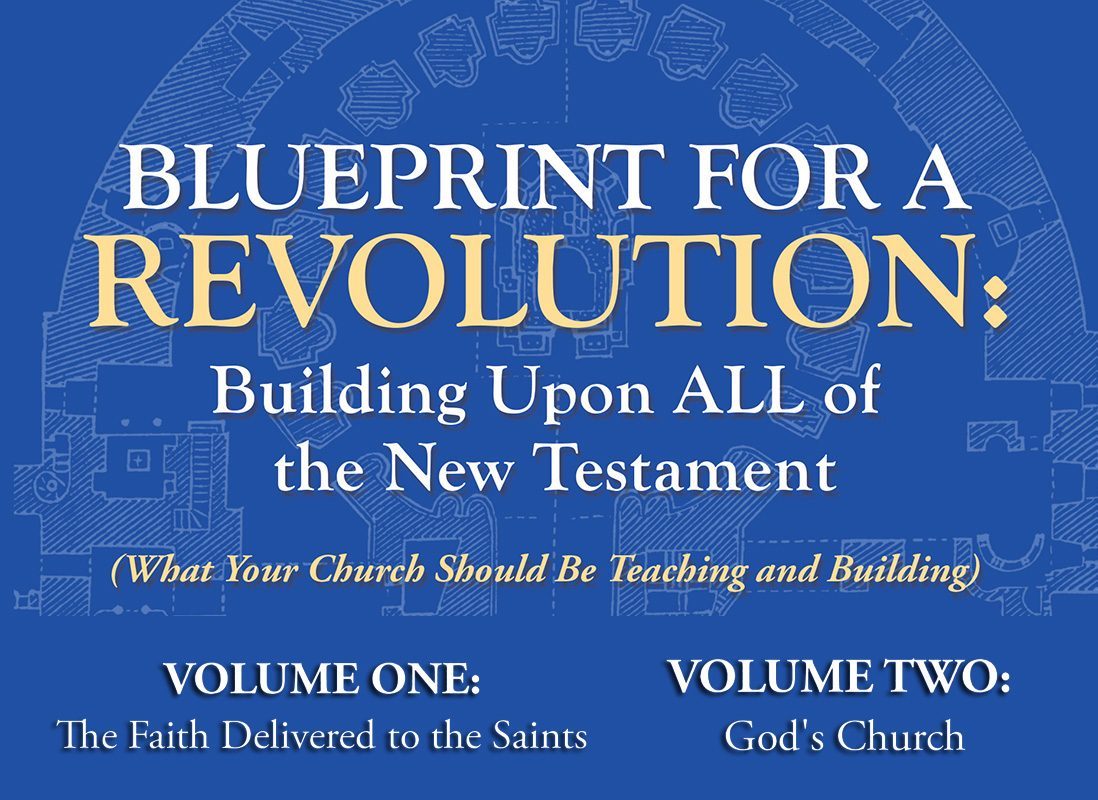
And being the simple fishermen and carpenters that they were, His original gentile churches continued to obey that divine prohibition. As I point out in my Blueprint for a Revolution: Building Upon ALL of the New Testament:
“Similarly, the famous Tertullian (c. 200 A.D.) also bore witness to the continuance of the apostolic tradition: (see note 1 at bottom), writing to the pagans: “Blush for your vile ways before the Christians, who have not even the blood of animals at their meals of simple and natural food; who abstain from things strangled and that died a natural death, for no other reason than that they may not contract pollution, so much as from blood secreted in the viscera. To clench the matter with a single example, you tempt Christians with sausages of blood, just because you are perfectly aware that the thing by which you thus try to get them to transgress, they hold unlawful. And how unreasonable it is to believe that those, of whom you are convinced that they regard with horror the idea of tasting the blood of oxen, are eager after the blood of men …”
“The western church continued obedient in this regard until around the time of Augustine (c. 400 A.D.), who defended its abandonment. The discipline continued on in the eastern church for centuries.” (see note 2) Most of us actually do NOT eat meat with the blood still within it, nor do most of us in America eat French or Spanish blood sausages, or English blood pudding, but it has nothing to do with any apostolic loyalty. After centuries of our churches having abandoned this apostolic command, the very thought of restoring it can feel, emotionally, like abandoning “civilized” society in favor of becoming some kind of social neanderthal. And yet, there it is the Book that we claim to have been inspired by God! And our honoring it is a wonderful way of bonding ourselves to our own ancient brethren who were being tested to betray Christ and avoid torturous deaths by merely munching on a Roman blood sausage!
5. DRESS MODESTLY: “Likewise, I want women to adorn themselves with proper clothing, modestly and discreetly, not with braided hair and gold or pearls or expensive apparel, but rather by means of good works, as is proper for women making a claim to godliness” (1 Timothy 2:9-10). This command addresses more than female modesty and living humbly – which would also apply to male disciples as well. It also had to do with the humble and simple culture that Jesus had inspired within a brotherhood living in God’s kingdom. The term “braided hair” was not a prohibition against female “pigtails;” it was a prohibition against braiding things like gold threads INTO the hair or wearing clothing that let the world know “I’m in the UPPER class of society!” Christianity’s later churches seem to have forgotten that their apostle Paul wrote, “… at this present time your abundance will serve as assistance for their need, so that their abundance also may serve as assistance for your need, so that there may be EQUALITY; as it is written: ‘The one who had gathered much did not have too much, and the one who had gathered little did not have too little’” (2 Corinthians 8:14-15).
The original living out of this command is but one more example that shows “those who have ears to hear” that the holy movement of Jesus that is described within the apostolic writings is VERY different than what has been downwardly evolved on its journey down to us! There was a voluntary but Spirit-led “leveling” and binding of His disciples into a very tightly-knit, deeply caring, communal extended family, something that rarely exists in any form of Christianity today. So many of the social and society-building ramifications of His Kingdom Christianity have been safely left behind within that supposedly Spirit-inspired Book!
There are numerous other examples to be found than these five, but I believe that the important principle about our fruit bearing obedience and loyalty to “LORD” Jesus has been established: the essence of calling Jesus “Lord” or “Master” is that the one using those exalted titles is FUNCTIONALLY obeying what is commanded by Him and His personally appointed representatives (Matthew 10:40) – and these “petty details” are all actually divine commands, by which you display whether or not you can FUNCTIONALLY treat Jesus as your “Lord” and “Master”! “Bond servant slaves of Jesus do not distinguish between what the SLAVE considers “petty” or “meaningful” acts of obedience. An enslaved body obeys all commands, great or small. An enslaved heart obeys for the right REASON!
It was the Master Himself who stated, “The one who is faithful in a very little thing is also faithful in much; and the one who is unrighteous in a very little thing is also unrighteous in much” (Luke 16:10).
Conclusion:
These simple and easy to perform commands, do not determine who IS a true follower of Jesus, because any fornicator or bully could also practice them. BUT they can help determine who is NOT following Jesus in the way and degree that HE commands us to follow him!
In our “real” world the same principle or instinct is used. Does a parent approve of the behavior of a child who loves to hug, but refuse to make their beds?
If you get a job as a probationary employee and show signs of competency but continue to park in the spot assigned to your boss, what are your chances of being hired permanently?
In a US Marine boot camp, you are an expert marksman, but refuse to salute your officers, what are your chances of becoming a Marine?
If you are an “MD” surgeon and know the human body like a genius, but are sloppy at tying those “petty” little surgical knots, what are your chances of NOT being sued for medical malpractice?
From my experience at the U.S. Merchant Marine Academy I learned about the well thought out way of how large ships are tied to their piers; very thick “hawsers” (ropes) need to be connected to the longshoremen down on the pier, but they are far too heavy to be thrown ashore and to catch. So, small ropes are connected to the larger hawsers, and THEY are tossed easily. God’s “petty” commands are somewhat like those small ropes: help provide a connection to practice the “big ones.” Our obedience to “Petty” commands are amazingly effective at measuring our STANDARD of obedience. “Lord” and “Master” are names signifying a very HIGH standards of obedience, no? The Biblical writers called themselves “SLAVES” of Christ (“bondservant” MEANS “slave”).
Furthermore, when you want to begin to teach your young child responsibility, do you begin with teaching them to drive a car or create a household budget, or do you start by teaching them to put away their toys in a box? Those “petty” details are easy and simple – exactly what is needed for a newborn to show good faith!
We can shout out till our throats are hoarse about “once ‘saved’, ALWAYS ‘saved’!” – but what if our sloppy obedience from a hardened heart is treated by Jesus in the way that He judged those “foolish virgins”: “Afterward the other virgins came also, saying, ‘Lord, Lord, open to us!’ But he answered and said, ‘Assuredly, I say to you, I do not know you’” (Matthew 25:10). You will notice that He did not “know” those virgins because they had been guilty of fornicating or treason, but because they were sloppy in what He expected from consecrated servants!
THE BASIC PROBLEM in the various incarnations of “Christianity” that we are presented with today, ESPECIALLY within our “democracy infected” American churches: the holy Son of God did not undergo such horrible suffering and then merely create our Apostolic literature as some mere “source book” that we are free to extract whatever theological abstractions and vague principles that we individuals or our denominational leaders feel free to use in order to create SUBSETS of what He inspired His apostolic writers to record. HIS Apostolic Church – what He called “MY Church” – is like that “body” that Paul described so eloquently in 1 Corinthians 12: a wonderfully thought out and exquisitely designed “body” of theology, promises, commands, commitments, behaviors, Spirit-caused experiences, world views, and heart-felt attitudes that create a “reincarnation” (as it were) of the Heavenly “Kingdom of God” that already exists on the “other side” – where He and His Father are waiting for us, and which will eventually be merged with that “new heaven and new earth” and its resurrected and glorified humanity, promised by God in Revelation 21! If your version of Christianity is not seriously preparing you for THAT future then it is one of the many devolved, man-made versions available that are accomplishing lesser, “THIS-world” focused goals.
Fortunately, even within such lesser versions, throughout church history, God has been able to inspire individuals who can model that heavenly reality for us! If our congregations will not consecrate themselves to that goal, then WE can and must!
AMEN?
********************
NOTES:
[1] “The Apology,” ch. 9. Ante‑Nicene Fathers, Vol. III, p. 25 (Grand Rapids: Eerdmans Publishing Co., 1963).
[1] The Seven Ecumenical Councils, Nicene and Post-Nicene Fathers, Series II, Volume 14, p. 715. “Canon LXVII of The Canons of the Council in Trullo,” 692 A.D. “If anyone henceforth venture to eat in any way the blood of an animal, if he be a clergyman, let him be deposed; if a layman, let him be cut off.” … “The apostolic precept of abstaining ‘from blood and from things strangled’ for some ages, not only among the Greeks but also among the Latins, was observed in many churches, but little by little and step by step it died out in the whole Church, at least in the Latin Church, altogether. In this the Latin Church followed the opinion of St. Augustine, “Contra Faustum Manichæum,” Lib. XXXII., cap. xiii., where he teaches at great length that the precept was given to Christians only while the Gentile Church was not yet settled. This passage of Augustine also proves that at that time Africa did not observe this precept of the Apostles.”
******************
ReedMerino.com
ReedMerino@Gmail.com
